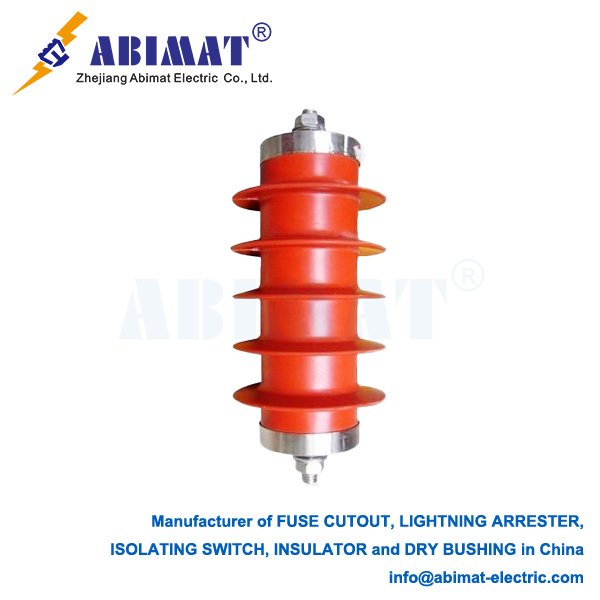
The Critical Role of Lightning Arresters in Protecting Distribution Transformers
Distribution transformers are key parts of the power grid. They lower high primary voltages to levels that work for end users. Their reliable operation is super important, and one of the biggest threats to them is transient overvoltages—mostly from lightning strikes. A lightning arrester is the special device made to protect this important equipment.
How It Works
A lightning arrester—also called a surge arrester more accurately—is a protective device. It connects between the phase and the earth, usually at the transformer’s terminals. Its main job is to limit transient overvoltages, like those caused by direct or indirect lightning hits on nearby power lines. It does this by sending the surge current safely to the ground. This way, it stops the overvoltage from going over the transformer’s Basic Insulation Level (BIL), protecting the winding insulation from breaking down.
During normal operation, the arrester has very high impedance. It acts almost like an open circuit. It doesn’t work and won’t let the regular power current pass. But when a lightning or switching surge happens, and the voltage rises to a set level (the breakdown voltage), the arrester’s internal parts start working right away. It “clamps” the voltage to a safe level by providing a low-impedance path to the ground for the surge current. Once the surge is gone and the system voltage gets back to normal, the arrester shuts off automatically. It goes back to its high-impedance state and stops the follow current.
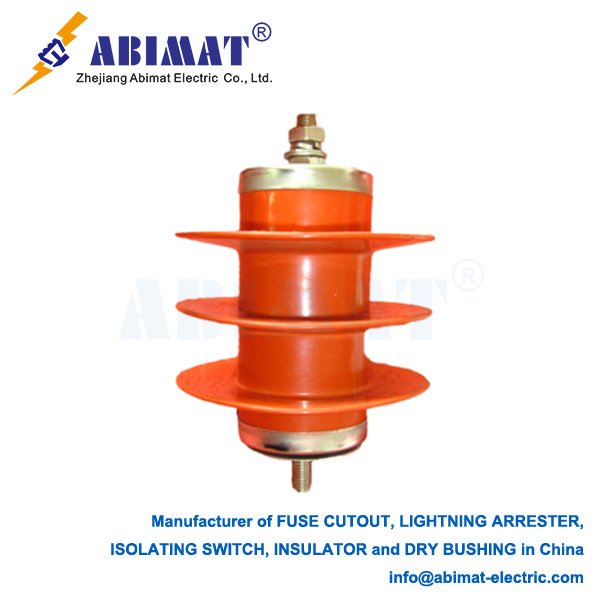
Key Technology: Metal-Oxide Varistor (MOV)
Modern arresters for distribution systems almost all use Zinc Oxide (ZnO) as the core material for their non-linear resistor blocks. These blocks are also called Metal-Oxide Varistors (MOVs). They have a very special voltage-current feature. That means within a narrow voltage range, they can change from a highly insulating state to a highly conductive one. This good performance lets them have lower protective levels. It makes insulation coordination more effective, and allows people to design smaller, cheaper transformers without reducing reliability.
Things to Consider for Selection and Installation
Choosing and installing the arrester correctly is key to good protection. Here are the main parameters:
- Rated voltage: It needs to match the system’s maximum continuous operating voltage (MCOV).
- Duty cycle: It must handle temporary overvoltages, such as those from fault conditions.
- Nominal discharge current: It shows how much surge current the arrester can handle while keeping the protective level stable.
Installation is also crucial. The arrester must be placed as close as possible to the transformer tank. The grounding connection should be the shortest and straightest possible. Long or coiled ground wires add unwanted inductance. This inductance creates a voltage drop when there’s a surge, putting higher voltage stress on the transformer terminals. That would make the arrester useless.
In conclusion, abimat lightning arresters are essential for protecting distribution transformers. They reliably divert harmful surge energy away from the transformer’s sensitive insulation. This ensures the power supply stays continuous and reliable, preventing expensive damage and long outages.