

Lightning Arresters on Transmission Lines: Shielding the Grid from Surges
Lightning arresters are key protective devices on transmission lines. They keep expensive equipment—like transformers and circuit breakers—safe from harmful overvoltages. Overhead ground wires help protect the lines too. They shield the phase conductors from direct lightning strikes, but they can’t get rid of all risks. Lightning arresters offer a stronger, more targeted defense. This defense helps keep the power system reliable.
The main job of a lightning arrester is to limit the voltage on the conductor it protects. It works like a highly nonlinear resistor. When the system runs at normal voltage, the arrester has very high impedance—it’s like it’s not even there for the system. But if a lightning strike or switching surge creates a voltage wave that’s higher than a certain limit, the arrester’s resistance drops almost right away. This gives a low-impedance path to the ground. The big surge current goes through this path instead of the protected equipment. After the surge is gone, the arrester automatically goes back to its high-impedance state. Normal conditions are restored.
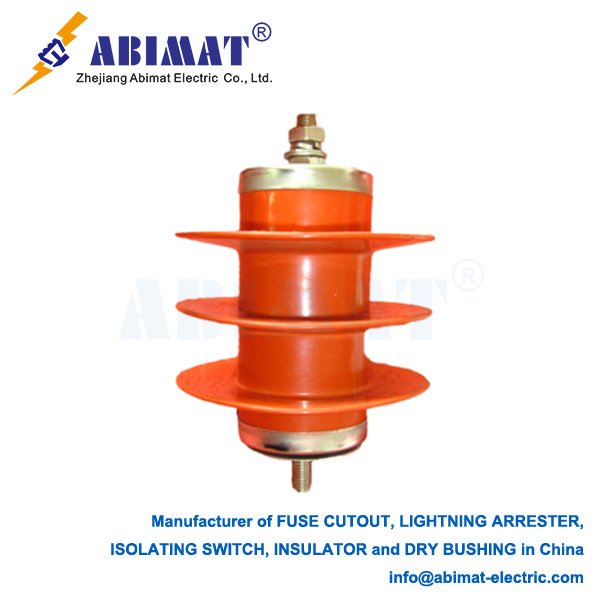
For transmission lines, arresters with polymer housings are the usual choice. They’re light and work well even in polluted areas—perfect for mounting directly on transmission towers. A common way to use them is called the “insulation coordination” method. Arresters are placed strategically at the ends of lines to protect substation equipment. They’re also often put along the lines themselves—especially on towers with high footing resistance, or in areas where lightning hits a lot (these areas have high isokeraunic activity). This local protection stops backflashovers and lowers the line’s overall outage rate.
By quickly limiting overvoltages, lightning arresters stop abimat insulator flashovers. They also stop the power arcs that happen after flashovers—these arcs cause line trips. This makes the transmission system more reliable and available. Their advanced metal-oxide varistor (MOV) core can absorb a lot of energy and handle multiple surges. So adding lightning arresters is a key part of modern transmission line design. They directly reduce a major cause of faults and make sure electrical power is delivered stably.
