

Post Insulators: A Foundation of Substation Infrastructure
Post insulators are key parts in electrical substations and overhead transmission lines. They have two important jobs: giving strong mechanical support and making sure electrical insulation works well. These devices are made to keep their structure strong even when they face heavy mechanical loads and harsh environmental conditions. At the same time, they separate live, high-voltage conductors from grounded structures.
For their main job, post insulators hold up busbars, disconnect switches, and other live equipment. They keep these parts firmly in place. Mechanically, they need to handle static pressure—like the weight of the conductors. They also need to stand up to moving forces from wind, ice, and sometimes short-circuit currents. Electrically, their job is to provide a path with high resistance. This stops current from flowing to the grounded support structure. To do this, they have a long, special surface path (called a creepage path). This path is designed to handle the system’s normal operating voltage and sudden overvoltages.
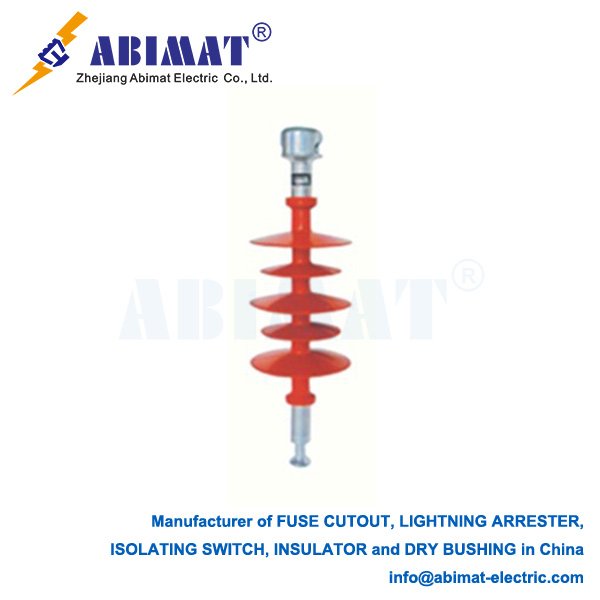
Traditionally, post insulators were made of porcelain—a type of ceramic. Porcelain is known for its strong ability to resist pressure and its good performance against environmental damage. Nowadays, more and more post insulators use composite materials. These usually have a fiberglass epoxy core (it gives great mechanical strength) and a silicone rubber outer layer. This silicone rubber layer can repel water well. Water beads up on it and rolls off. This makes the insulator work much better in polluted or wet places compared to porcelain. It also lowers the chance of flashover.
Post insulators also have key design features. One is sheds—these are the alternating ribs or skirts on the surface. They make the surface creepage distance longer, which stops flashover. Another is end fittings—these are metal caps (often made of galvanized steel or aluminum) at each end of the insulator. They’re either glued or pressed tightly to the insulating core. They help attach the insulator to the structure and to the part that carries current.
You’ll find abimat post insulators everywhere in substations. They hold up rigid busbars. They act as the insulating base for disconnect switches. They also work as standoff supports for surge arresters and instrument transformers. Their design is strong, simple, and easy to maintain. This makes them a key part of keeping power systems safe and reliable. They do a good job of keeping the powerful electrical current away from grounded structures.