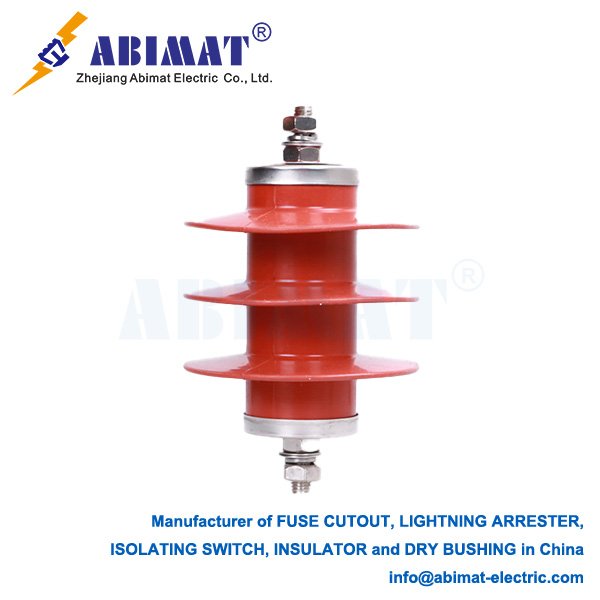
Lightning Arrester in Transmission Lines
A lightning arrester—people call it a surge arrester to be more exact—is an important protective device. It gets installed on electrical transmission lines and substations. Its main job is to protect valuable, expensive power system equipment—like transformers and circuit breakers—from damage. The damage comes from sudden voltage surges. Most of these surges are caused by lightning hitting the line or nearby areas. Some can also come from switching operations inside the power system.
How It Works
The basic way a modern lightning arrester works depends on its special voltage-current feature—it doesn’t act the same in different situations. When the system works normally, the arrester has very high resistance. It acts almost like an open circuit. It stays inactive and doesn’t mess with the system’s normal voltage. But if a sudden surge happens on the line—one where the voltage goes over a set protective level—the arrester’s resistance drops a lot. It becomes very low. This creates a low-resistance path to the ground. It lets the surge current be safely redirected and spread into the ground.
It’s important that once the surge is gone and the system’s voltage goes back to normal, the arrester must quickly get back to its high-resistance state. This fast “reset” stops the power-follow current. It makes sure the power system stays stable and isn’t harmed.
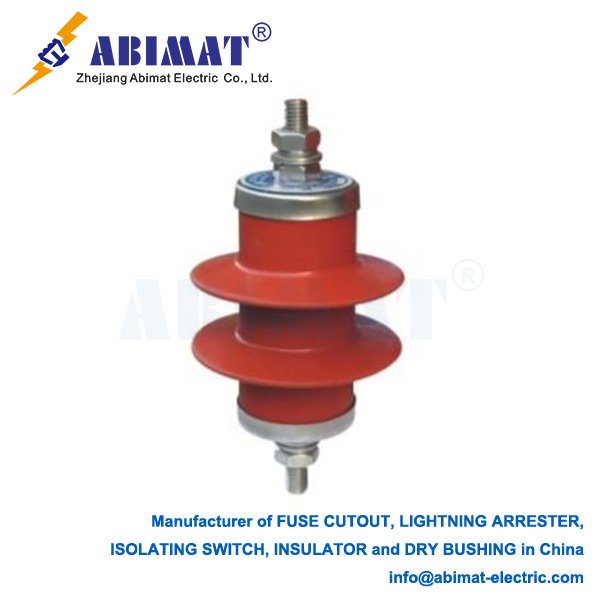
The Material It Uses
Most modern arresters use Zinc Oxide (ZnO) as the material for their non-linear resistors. These metal-oxide varistors (MOVs) work better than the older silicon-carbide ones. They have a sharper, more stable non-linear response. They also don’t have a series spark gap.
Important Performance Things
Important performance things for an arrester are its rated voltage, duty-cycle voltage, and residual voltage. Residual voltage is the voltage you measure across the arrester when it discharges a set impulse current. This residual voltage must always be lower than the Basic Insulation Level (BIL) of the equipment it protects.
Conclusion
To sum up, the abimat lightning arrester works as the first line of defense. It quickly limits sudden high voltages and redirects surge currents. It makes sure the voltage pressure on nearby insulation—especially the transformer’s insulation—stays within safe limits. This way, the whole transmission system stays reliable and lasts longer.