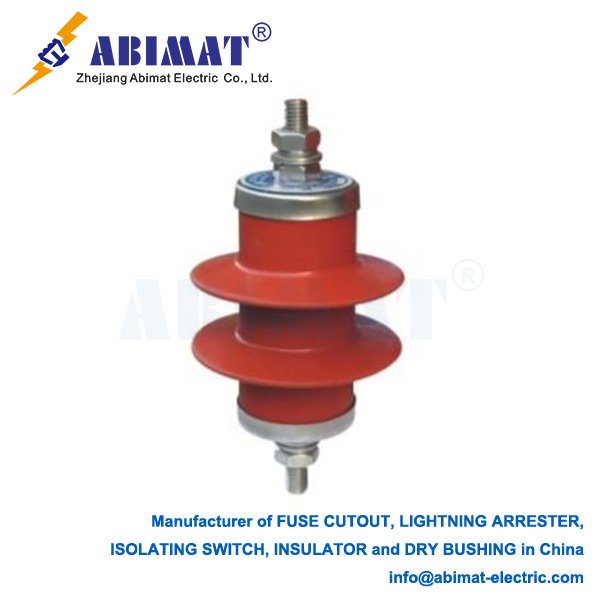
11kV Lightning Arrester: Key Protection for Medium-Voltage Networks
11kV lightning arresters work as key protective tools in medium-voltage electrical distribution systems. They usually safeguard transformers, switchgear, and overhead lines. These tools don’t stop lightning directly. Instead, they protect valuable equipment by limiting sudden overvoltages—like those set off by lightning strikes or switching operations—and safely guiding the resulting surge current to the ground.
Core Working Principle: The Metal-Oxide Varistor (MOV)
Nearly all modern 11kV arresters use gapless Metal-Oxide Varistors (MOVs). The core of these MOVs is a stack of zinc oxide (ZnO) discs—and these discs have a highly non-linear voltage-current characteristic.
When the system runs at its nominal voltage (like 11kV phase-to-phase), the ZnO discs have very high resistance. Only a tiny amount of leakage current—just micro-amperes—flows through them. That’s why the arrester barely affects the system during regular use.
If a transient overvoltage pops up—one that’s stronger than the arrester’s rated capacity—the ZnO discs’ resistance drops fast, in just nanoseconds. This makes a low-impedance path to the ground. It lets the surge current get safely redirected away from the equipment it’s protecting.
Once the overvoltage goes down, the arrester goes back to its high-resistance state on its own. It stops the flow of power-frequency follow current and brings the system back to normal conditions.
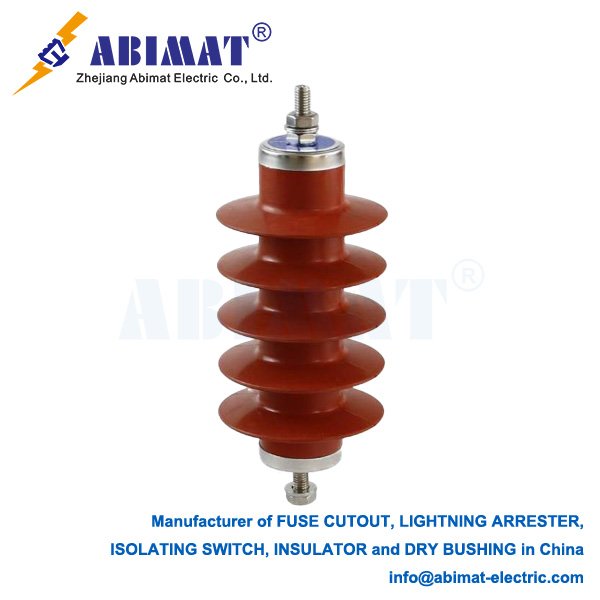
Key Components and Design
A typical 11kV station-class arrester has four main parts:
- MOV Block: This is the central zinc oxide element. It’s the part that limits voltage.
- Housing: Made of porcelain or polymer, it provides mechanical strength and isolates the device from the environment. It also offers enough creepage distance to prevent surface tracking.
- Sealing System: Seals at both ends are critical. They keep moisture out, as moisture is a top cause of arrester failure.
- End Fittings: These are metal terminals. They create strong connections to the high-voltage line and the earth ground.
Critical Performance Parameters
Several ratings matter when choosing an 11kV arrester:
- Rated Voltage: This is the maximum power-frequency voltage the arrester can handle. For 11kV systems, it’s usually 12kV or 15kV.
- Duty Cycle (MCOV): The Maximum Continuous Operating Voltage is the peak power-frequency voltage that can be applied nonstop.
- Nominal Discharge Current: This is the peak value of the lightning current impulse (such as 10kA) used to classify the arrester.
- Residual Voltage: This is the voltage across the arrester terminals when it discharges the nominal current. A lower residual voltage means better protection for downstream equipment.
Conclusion
All in all, abimat 11kV lightning arresters are smart, self-healing devices. They’re vital for keeping medium-voltage power infrastructure reliable and long-lasting. They quickly clamp overvoltages to a safe level, acting as the first defense against sudden, destructive surge events.