

11kV Drop-Out Fuse: An Essential Overhead Line Protector
The 11kV drop-out fuse is a key protective device used a lot in medium-voltage overhead distribution networks. It has two main jobs: protecting against overcurrent and short circuits reliably, and making a clear break to isolate circuits. Its design is made for 11kV systems—this voltage is common for rural and suburban distribution. It gives a cheap but good and strong solution.
How It Works and Its Main Parts
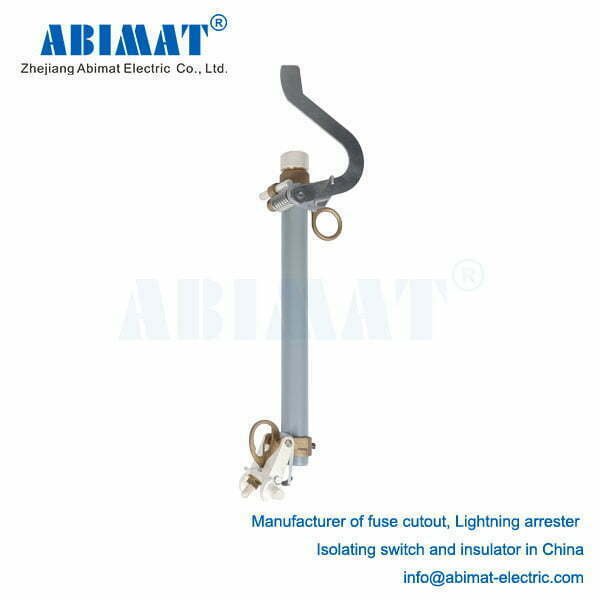
The fuse works in a simple way. It has three main parts: a fuse base, a fuse carrier, and the fuse element—people also call this a link. When the load is normal, the fuse element (inside the carrier) keeps the whole part under mechanical pull. This pull holds the assembly in the closed (on) position.
When there’s a fault current—like an overload or a short circuit—that’s higher than the element’s rated current, the fusible link melts and creates an arc. This arc gets put out inside the fuse carrier, which is filled with sand. Importantly, once the fuse element melts, the mechanical pull goes away. This makes the fuse carrier swing down and “drop out.” It hangs from the hinge where you can see it. This action lets you clearly see that the fuse has worked—and that’s an important safety feature.
Key Features and Benefits
Visible Isolation
When the carrier drops out, it creates a clear open space. This makes it safer for maintenance workers.
Cost-Effectiveness
For protecting feeders and transformers, it’s a cheaper option than reclosers or circuit breakers.
Rupturing Capacity
It’s designed to safely stop fault currents up to its rated level—like 12.5kA according to IEC 60282-1.
Simplicity and Reliability
It doesn’t have many moving parts. So it works well most of the time and needs little maintenance.
Main Uses
Transformer Protection
It’s the common way to protect 11kV to LV (Low Voltage) distribution transformers. You choose the fuse’s rating carefully to match the transformer’s fault traits.
Feeder Sectionalizing
You install them along overhead lines. They isolate the parts with faults, reducing how many areas lose power and helping get power back faster.
Switch-Disconnect Function
You use a hot-stick to open the fuse carrier by hand. This lets you safely isolate a circuit, so it works like a disconnect switch.
Choosing the Right Fuse and Coordination
Choosing the right fuse is very important. You must choose the fuse’s current rating so it can handle the normal load current of the thing it’s protecting—like a transformer. It should only melt when there are harmful fault currents.
Matching the time and current with upstream devices is important too. This makes sure the right fuse works, keeping the system working right.
To sum up, the abimat 11kV drop-out fuse is still a key part of overhead distribution systems. People value it because of its clear safety signs, simple operation, and cheapness and efficiency.
