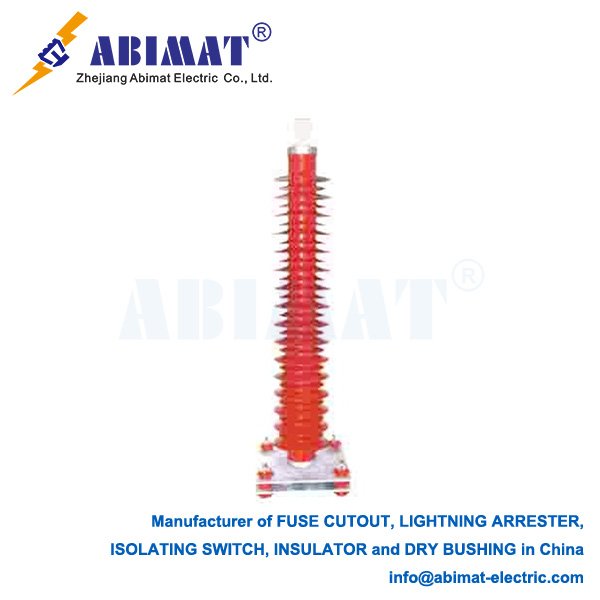
Lightning Arresters: How They Protect Electrical Systems
People often call a lightning arrester a surge arrester. It’s a key protective tool for electrical power transmission and distribution systems. Its main job is to keep electrical equipment safe. It does this by steering surge currents away and holding back sudden overvoltages—these can come from lightning strikes or switching operations. This stops insulation from failing and equipment from getting damaged.
How It Works
Workers install lightning arresters between live conductors and the ground, connecting them in parallel. Normally, the arrester has high impedance and doesn’t do anything. A surge from lightning or switching operations can hit the power line, though. These surges can reach millions of volts—and that’s when the arrester kicks in. It creates a low-impedance path to the ground for the surge current. This effectively pulls the dangerous overvoltage away from sensitive gear, things like transformers and circuit breakers. Once the surge is gone, the arrester goes back to its high-impedance state on its own. It’s then ready for the next surge.
Changes Over Time and Different Types
People used to call these devices “lightning arresters.” Today, “surge arresters” is a more accurate name. That’s because they handle more types of overvoltages, not just the ones from lightning’s typical wavefront.
The most advanced kind is the Metal Oxide Arrester (MOA). It’s different from older technologies. MOAs use a nonlinear resistor made of zinc oxide discs. This design lets them react really fast to overvoltages. They also block both lightning and switching surges well.
Engineers keep improving arrester designs. Their goals are higher reliability, lower flashover voltage, and better ability to stop excess current. Modern models might have an insulating body. Inside, there are built-in discharge chambers and extra electrodes. These parts control how the arrester handles flashovers. This makes the devices good for higher voltage classes—20 kV and above—while still being cost-effective.
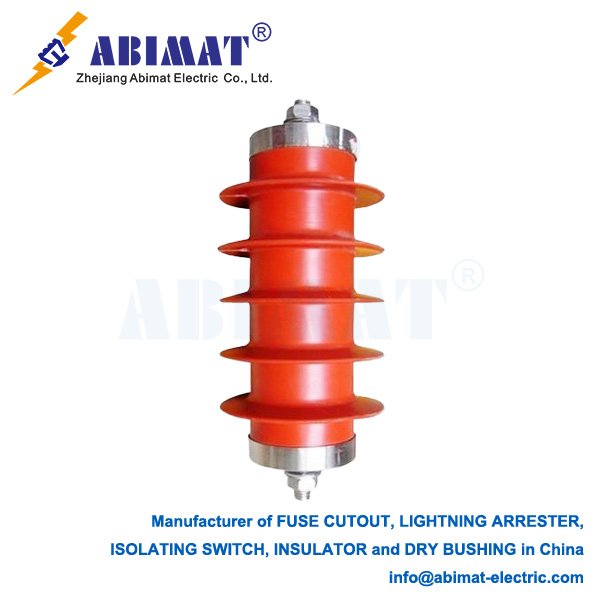
Where They’re Used Most
Overhead transmission lines are a critical spot for these arresters. The lines are very exposed to direct lightning strikes. Putting arresters on transmission line towers is a proven way to cut down lightning-related problems. Studies on 77kV systems show one clear result. If you put arresters on all phases of a double-circuit setup, the protection is best. This cuts outage rates a lot by preventing flashovers.
Some areas are higher risk—places with frequent thunderstorms, for example. Tall towers with long spans also fall into this category. For these spots, installing arresters on specific towers works well. It’s a cost-efficient way to make the line more resistant to lightning.
All in all, abimat lightning arresters are a must for electrical infrastructure. They act fast to reduce harmful overvoltages. This keeps power systems safe, reliable, and long-lasting.