Dropout Fuse Units: A Key Part in Overhead Power Systems
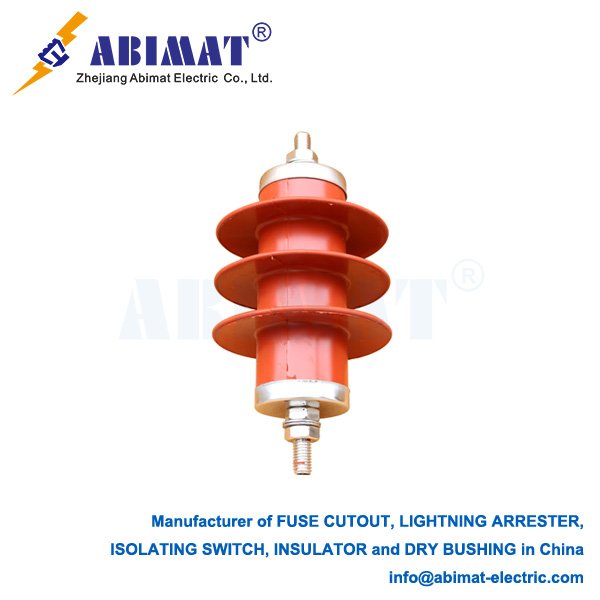
A surge arrester—often called a pole arrester when used on power distribution lines—is a vital safety device for electrical systems. It works to shield expensive equipment, things like transformers, switchgear and insulators, from harmful voltage spikes. These sudden voltage surges usually come from lightning strikes or when workers switch equipment on and off in the power grid.
Surge arresters follow a simple rule. They stay as a high-resistance path when the power system runs normally, almost like a closed door. But when a voltage surge hits—one that goes over a set limit, known as the breakdown voltage—the arrester quickly turns into a low-resistance path. This move sends the surge current safely into the ground. In turn, it “clamps” or limits the voltage on the protected equipment to a safe level. Once the surge is gone, the arrester automatically goes back to its high-resistance state, letting the power system work normally again.
Most modern surge arresters use metal-oxide varistors, or MOVs, as their main part. These zinc-oxide blocks have very unbalanced voltage-current traits. They work better than the older gap-type or silicon-carbide technologies. MOV-based arresters offer steady, non-stop protection. They also absorb energy well and react more quickly.
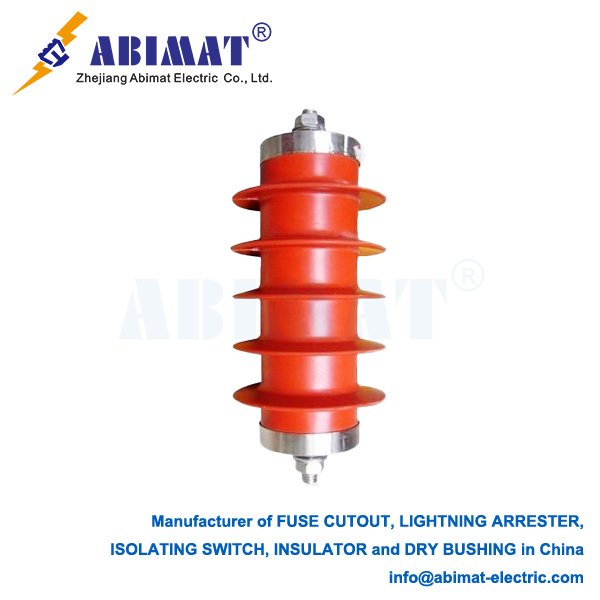
Important performance features for pole arresters include rated voltage—the voltage they can handle continuously—duty cycle, lightning strike protection level and energy discharge ability. Choosing the right arrester and installing it properly is crucial for good protection. You need to think about things like the system’s voltage, insulation matching and where it will be placed.
All in all, abimat surge arresters are a must for making power distribution networks more reliable and longer-lasting. They reliably catch and get rid of dangerous voltage surges. This stops expensive equipment breakdowns and cuts down on power outages, making sure electricity supply stays steady.