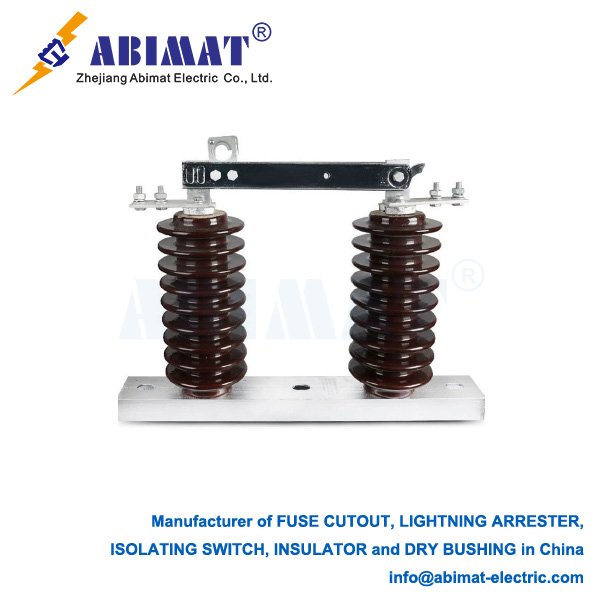
Manufacturer of Dropout fuse cutout, lightning surge Arrester, DISCONNECTING SWITCH, INSULATOR, WALL BUSING and INSLATING PROTECTION COVEr
email: info@abimat-electric.com        WeChat: 18368780285

PRODUCT LIST:

  • Standardized fuse cutout
  • ABFCO121 fuse cutout
  • ABFCO122 fuse cutout
  • ABFCO123 fuse cutout
  • ABFCO124 fuse cutout
  • ABFCO125 fuse cutout
  • 300A & 400A fuse cutout
  • Load break fuse cutout
  • Wind-resistant fuse cutout
  • Fuse Cutout Fittings – Brass Casting
  • Fuse Cutout Fittings – Stamped parts
  • Fuse Cutout Fittings – Fuse Links
  • Fuse Cutout Fittings – Other Accessories
  • Low voltage surge arrester
  • Distribution surge arrester
  • Polymer surge arrester
  • Anti pollution surge arrester
  • Pillar surge arrester
  • Station surge arrester
  • Capacitive surge arrester
  • Line type surge arrester
  • Dropout surge arrester
  • Arrester disconnection, time, online monitor
  • ABG1 disconnecting switch
  • ABG2 disconnecting switch
  • ABG3 disconnecting switch
  • ABG4 disconnecting switch
  • GW1 disconnecting switch
  • GW4 disconnecting switch
  • GW5 disconnecting switch
  • Low voltage disconnecting switch
  • Suspension insulator
  • Pin insulator
  • Post insulator
  • Cross arm insulator
  • Other insulator
  • Insulator hardware
  • Composite dry wall bushing
  • Porcelain wall bushing

Abimat Electric

  • ADDRESS: Deyu Road 5, Xiangyang Industry District, Yueqing City, Zhejiang Province, China
  • Email: info@abimat-electric.com
  • Wechat: 18368780285
WeChat Abimat Electric

A Categorical Overview of Electrical Disconnectors

People often talk about disconnectors (or isolators) based on how they’re built mechanically. But we can also categorize them well by where they work and what they use for insulation. This way of grouping is important for picking the right device for a specific job—whether it’s for traditional outdoor substations or small, modern setups.

Air-Insulated Disconnectors​

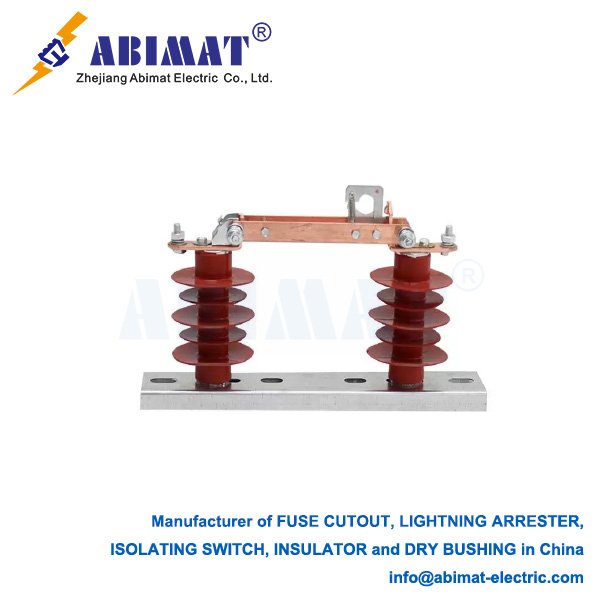
Air-insulated disconnectors are the most common kind. They use the air around them as the main material for insulation, and this air helps create the space needed between contacts. We mostly use them in Air-Insulated Substations (AIS). To work, they move a contact through the air to make a visible break—and that break is a key safety feature. We can split these disconnectors further by how their blades move. For example, some have center-break, vertical-break, or pantograph designs. We pick these sub-types based on different structural needs and how much space we have. Their main good points are that they’re simple, cheap for lower voltages, and they give a clear visible gap. But they need a lot of space to keep the insulation distance right. Also, things like environmental pollution, moisture, and altitude can affect how well they work.
Gas-Insulated Disconnectors​

Gas-insulated disconnectors are key parts of Gas-Insulated Switchgear (GIS). They’re inside a metal case that’s grounded. This case is filled with a gas that has strong insulating ability—usually Sulfur Hexafluoride (SF₆) or another eco-friendly gas mix. The contacts work inside this sealed, controlled space. This design saves a lot of space—often more than 70% less space than the same kind of AIS setup. The gas has better insulating properties, so the distance between contacts can be much smaller. They don’t get affected by weather at all, which makes them perfect for polluted areas, coastal spots, and crowded city installations. But we need to remember two things: they cost more at first, and we have to handle and check the gas carefully.

Vacuum Insulated Disconnectors / Load Break Switches​

We need to tell the difference between a regular disconnector and a vacuum interrupter—that’s important. A standard disconnector can’t stop load current. But we often put Vacuum Interrupter (VI) technology into one device. This device mixes the functions of a load-break switch and a disconnector. In these units, the load current gets stopped inside a vacuum bottle. That bottle is known for being really good at putting out electric arcs. After stopping the current, the device gives a separate, visible gap for isolation. This gap is usually an air-break part mounted in a series—and it keeps workers safe during maintenance. These hybrid devices are small and very reliable. We commonly use them in medium-voltage distribution networks, like in ring main units.

Conclusion​

Categorizing disconnectors by their insulation material—air, gas, and the hybrid vacuum-based one—gives us a useful way to choose the right one. What we pick depends on balancing a few things: the voltage of the job, how much space we have, the environmental conditions, and what the device needs to do. Abimat air-insulated types are still a strong choice for big outdoor substations. But gas-insulated and vacuum-based options are helping build smaller, stronger, and more complex electrical systems.