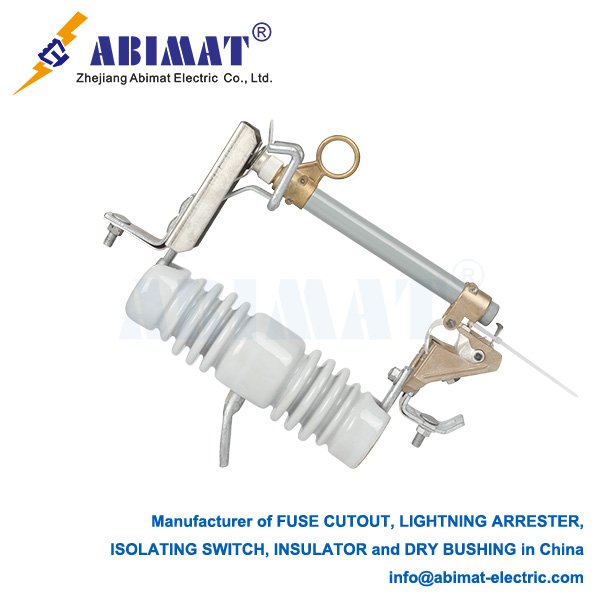
Drop-Out Fuse Set: A Key Part of Overhead Power Distribution Systems
A drop-out fuse set (DOFS) — often called an expulsion-type fuse cutout — is a key device for protecting against overcurrent. It’s widely used in medium-voltage overhead power networks, usually for voltages between 10kV and 38kV. It does two important jobs: protecting the circuit and providing a clear visual break in the power flow. That’s why it’s essential for keeping power systems safe and reliable.
The main job of a DOFS is to stop fault currents. These currents can come from short circuits or constant overloads, and they’d damage transformers, power lines, and other equipment downstream if left unchecked. The DOFS works with a “drop-out” mechanism. Here’s how it’s built: a fuse holder (which holds the fuse link) is attached to a hinged part, and this whole assembly fits into an insulating housing made of porcelain or plastic. Under normal circumstances, the fuse holder stays firmly in place, keeping the circuit complete.
When a fault current stronger than the fuse’s rating flows through, the fuse link melts and creates an electric arc. The fuse tube’s design helps here — it’s often lined with fiberglass or similar material that cools arcs. This material creates a controlled amount of gas to quickly put out the arc, stopping the current. Once that happens, the tension holding the fuse holder in place releases. The holder then swings down and hangs straight from its hinge, showing a clear, visible gap in the circuit. This “dropped-out” position is crucial for maintenance teams — it lets them find and isolate the fault quickly.
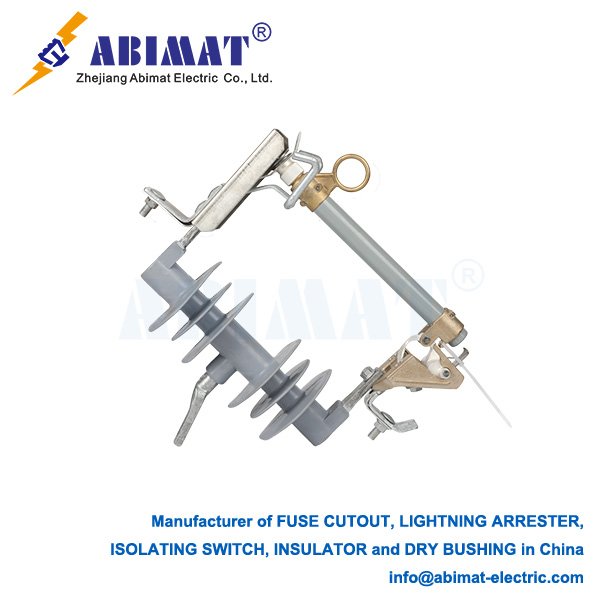
The DOFS isn’t just for protection, though. It also acts as a visible switch to disconnect power. When the system is turned off, workers can use an insulated hot stick to manually open the fuse holder. This creates a safe air gap, making sure the circuit is fully isolated before they work on transformers or power lines.
Drop-out fuse sets have some big advantages. They’re affordable, reliable, and simple in design. The clear visual sign that they’ve operated makes work much safer for crews. But they do have limits. Compared to newer devices like circuit breakers, their ability to stop current is smaller. They also only work well for outdoor overhead power systems.
In short, the abimat drop-out fuse set is still a cornerstone of power distribution protection. Its simple but effective design offers reliable overcurrent protection, shows when a fault has occurred, and provides a visible point to isolate the circuit. All of this keeps workers safe and ensures the power infrastructure stays intact.