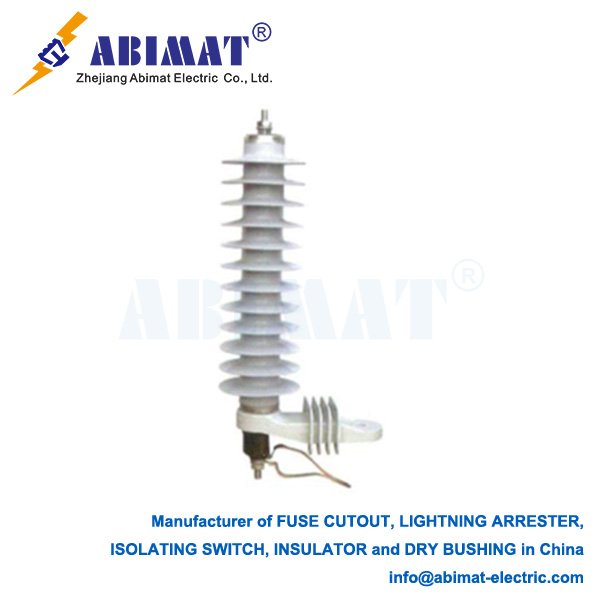
Metal Oxide Arresters: Guardians Against Surge Voltages
A metal oxide arrester (MOA), often called a surge arrester, is a key part of electrical power systems. It protects high-voltage equipment from harmful sudden voltage spikes—think lightning strikes or switch operations. Its main job is to control these overvoltages, and it does this by sending the surge current into the ground, then getting the system back to normal quickly.
Modern MOAs have a core made of stacked zinc oxide (ZnO) discs, and these discs sit inside an insulator—either porcelain or polymer. Traditional silicon carbide arresters need a series gap, but ZnO arresters have no gaps at all. That’s because the zinc oxide, mixed with other metal oxides like Bi₂O₃ and Sb₂O₃, has a very unusual voltage-to-current behavior.
Under normal system voltage, the zinc oxide discs behave quite differently. They have extremely high resistance, so only a tiny leakage current—just a few microamps—flows through them. This high resistance, importantly, keeps the arrester disconnected from the active power system when everything works as it should.
Things change when a sudden overvoltage hits, one that goes above a set limit. The zinc oxide’s properties shift fast: its resistance drops drastically, by millions of times, in an instant. This creates a low-resistance path to the ground, letting the arrester “clip” the voltage surge at a safe level and safely draining the massive energy from the surge.
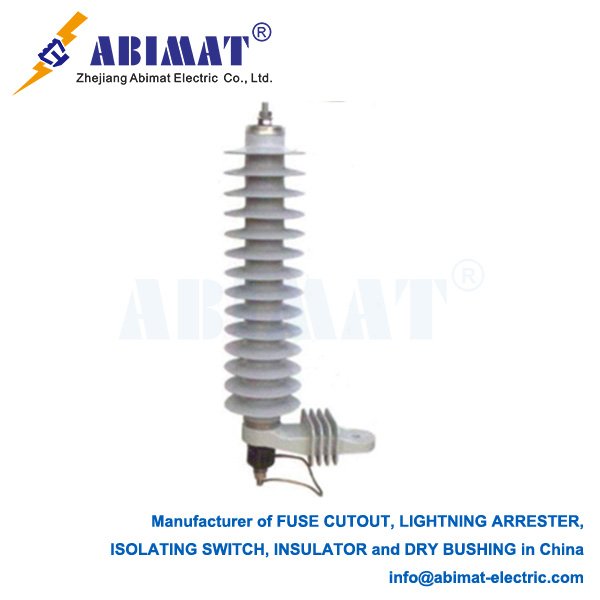
These insulators are built to meet strict international standards, such as ANSI C29.17. Their electrical performance depends on key factors: dry arcing distance and leakage distance. These two things directly affect how well the insulators resist flashovers when dry or wet. For high-voltage transmission use, their flashover voltage is usually rated in the hundreds of kilovolts. At high voltages, controlling electric field distribution is important. So many insulators work with corona rings — or have them built-in — to stop harmful corona discharges. The end parts are often made of strong, galvanized materials like aluminum alloy or ductile iron. They are sealed tight to keep moisture from getting into the core.
Polymer station post insulators are widely used for horizontal post setups in electrical transmission systems. Common voltages for these setups are 115kV and 230kV. Utility companies are using more of them to upgrade substation infrastructure. Why? They are reliable and easy to maintain. They are light, and they resist damage from vandalism. This upgrade work helps make the power grid stronger. It’s especially useful for important projects, like shifting power loads during peak times and keeping the power on reliably in winter.
All in all, abimat polymer station post insulators are a better, modern choice. They are light, strong, good at handling pollution and reliable over time. They make sure electrical substations stay safe and stable.