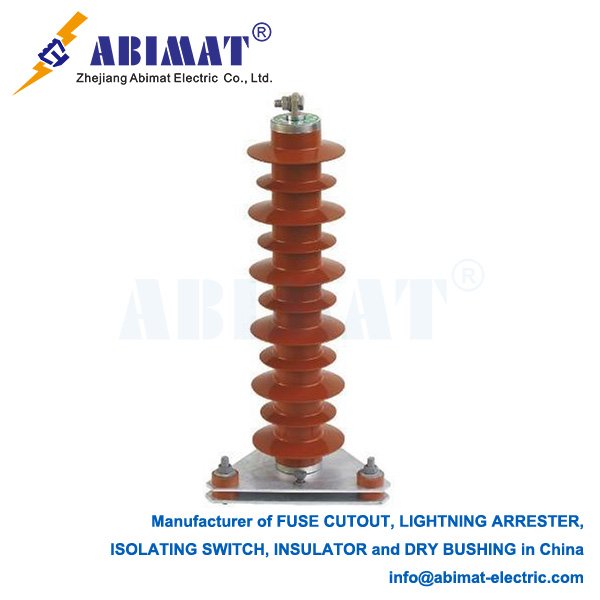
Polymer-Housed Surge Arresters: Better Overvoltage Protection
Polymer-housed surge arresters, often called polymer lightning arresters, are a big step up from traditional porcelain ones. They play a key role in power systems. Their job is to shield insulation and equipment from harmful overvoltages—these can come from lightning or switching surges. They work by cutting down voltage levels: they send the surge current to the ground, then go back to normal working condition on their own.
All modern surge arresters have a core part: the metal oxide varistor (MOV). It is usually made of zinc oxide. The MOV has a very non-linear voltage-current feature. Under normal system voltage, it acts as a high resistor. When hit by an overvoltage, though, it turns into a low resistor. The real improvement of polymer arresters is not the MOV stack itself. It lies in their housing and overall design.
These arresters use housings made of silicone rubber or EPDM (Ethylene Propylene Diene Monomer). This material brings many clear benefits.
It has stronger mechanical performance. The polymer housing can stand up to impacts and vandalism well. It is light and flexible too. That makes it less likely to get damaged during transport and installation. It also holds up better when there’s a dangerous failure under serious fault conditions.
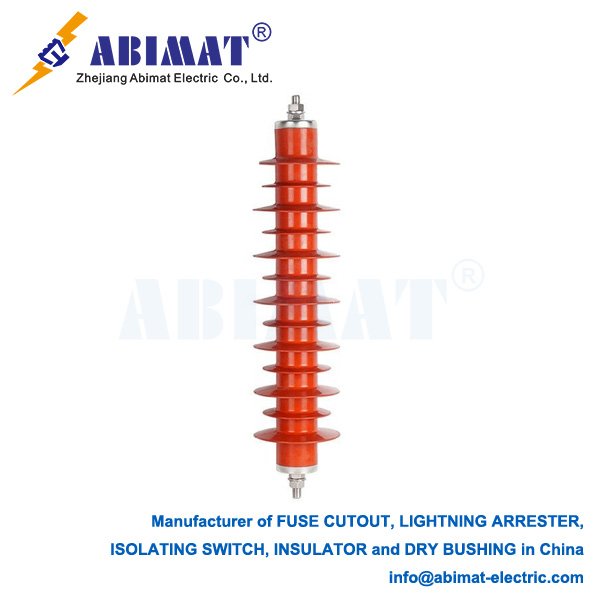
It also resists pollution better. Silicone rubber, for one, is hydrophobic—it repels water. Water beads up on its surface and rolls off. This stops a continuous conductive film from forming. The result? These arresters work well in dirty or coastal areas. They are less likely to have flashovers and stay reliable.
They are light and safer to use. Polymer arresters weigh much less than porcelain ones. This makes them easier to handle and install. It also means less support is needed for their structure. What’s more, internal failures are rare. But if one happens, the polymer housing usually breaks in a calm, controlled way. This keeps workers safer.
Their sealing is top-notch too. Many of these arresters use advanced sealing methods. For example, they may have composite fiberglass cores. Silicone rubber is then directly molded onto internal parts. This creates a tight, airtight seal. It keeps moisture out—and moisture is a main cause of arrester breakdowns.
Inside, many use a “one-piece” design. The housing and sealing system are merged here. This gets rid of gaskets and multiple connections. Porcelain arresters have these parts, and they often lead to problems.
All in all, abimat polymer-housed surge arresters are a reliable, long-lasting choice for overvoltage protection. They work well in tough environments. They are also safer and more mechanically strong. That’s why utilities and industries around the world prefer them to protect equipment in transmission and distribution networks.