Suspension Insulators: A Key Part of Overhead Line Design
High-voltage and extra-high-voltage (EHV) overhead power lines rely heavily on suspension insulators. These parts do two main jobs: they hold up live wires and keep those wires electrically separate from the grounded towers.
Post insulators, by contrast, are stiff and solid. Suspension insulators are different—they form a flexible string. This string hangs straight down from the tower’s cross-arm, and the power wire dangles from its bottom end.
The most common and well-established design is the cap-and-pin insulator. It is made up of separate units, often called “discs.” Metal parts— a cap on top and a pin below—link these discs together in a chain.
Most of these discs are made from porcelain or tempered glass. Each one is built to handle a certain amount of voltage; 11-15 kV is a typical range for a single disc. To get the right insulation level for a power line, you just put enough of these identical discs together to make a string.
This modular design has a big plus: it’s flexible. If one disc gets broken, you can replace that single disc. You don’t have to throw away the whole string.
The string also moves freely, swinging with the wind or wire shifts. This ability makes it more durable against the mechanical stress from moving wires and wind pressure.
Suspension insulator strings have two core jobs. One is electrical insulation. They need enough insulating strength to stop “flashover”—a sudden spark—between the wire and the tower. This is important even when things go wrong, like voltage spikes from switching equipment or lightning strikes.
The other job is mechanical support. The string must be strong enough to pull weight. It has to carry the wire itself, plus extra loads—ice buildup on the wire, strong winds, and the jolts and shakes that come with normal use.
One key measure of an insulator’s performance is its “specific creepage distance.” To put it simply, this is the total length of the insulator’s surface (the path where electricity might leak) divided by the line’s voltage.
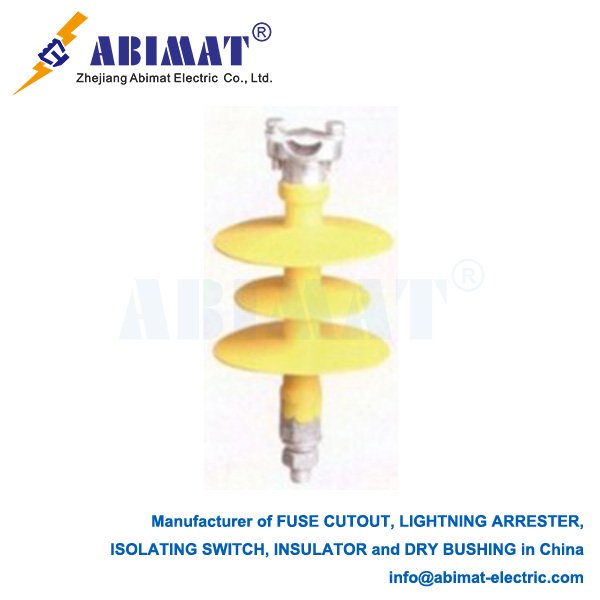
Insulators often have long, ridged surfaces. These ridges make the creepage distance longer. In dirty or damp places, this design works well—it stops a continuous layer of conductible material from forming on the surface, which helps the insulator work better.
In the last few decades, composite (or polymeric) suspension insulators have become much more popular. They now hold a large share of the market.
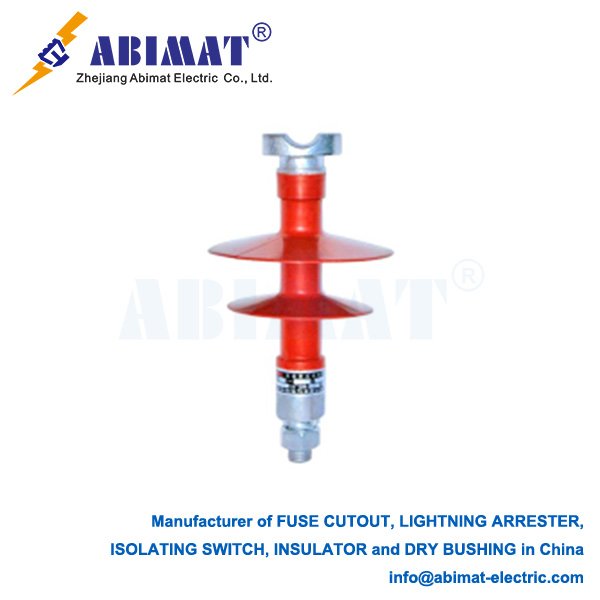
These composite insulators have a core made of fiberglass and epoxy resin—this core gives them their strength. Around this core are “sheds,” the outer parts, made of silicone rubber or EPDM (a type of synthetic rubber).
They have clear advantages. They are lighter than traditional insulators. They also repel water really well—this “hydrophobic” trait lowers the chance of flashover caused by dirt and moisture. On top of that, they are harder to damage on purpose.
There is a catch, though. When choosing them, you still need to check how well they hold up over time—things like weather damage and resistance to the sun’s UV rays matter a lot.
Picking between ceramic (porcelain or glass) and composite insulators isn’t random. You have to look closely at several factors: the line’s voltage, how dirty the local environment is, the mechanical strength needed, and the total cost over the insulator’s life.
At the end of the day, abimat suspension insulator strings need to work reliably. Their performance is the foundation of a safe and steady modern power transmission network.