Suspension Insulators in Overhead Transmission Lines
Suspension insulators are key parts of high-voltage overhead transmission lines. They hold the live conductor in place mechanically and keep it electrically separate from the grounded tower. Unlike stiff post-type insulators, these insulators work mainly under tension—this is what makes their design special.
The most widely used kind is the cap-and-pin (or disc) insulator. It has one insulating unit. In the past, people made these units from porcelain or glass. Now, more and more use polymer (composite) materials. Each unit has a metal cap on top and a pin at the bottom. Workers link these units together in a line to make a flexible string. The number of discs in the string ties directly to the system’s voltage. Higher voltages need longer strings, as these provide enough space for leakage currents and enough insulating strength.
Suspension insulators have important uses and clear benefits.
They offer mechanical flexibility. The suspended strings can swing when wind blows or the conductor moves. This cuts down on mechanical stress. This flexibility also lets workers adjust the conductor’s height and position easily.
They are modular and reliable. If one disc gets damaged or dirty, the others still work. This keeps the power supply going. Workers can usually spot the bad disc and replace it alone.
They work well in different conditions. The string shape naturally gives a long path for leakage currents to flow. This helps the insulator perform better when it’s polluted or wet. Each disc’s shape also helps it clean itself when it rains.
They suit high-voltage needs. For transmission lines above 33 kV, this design is better—both in cost and technology. At these voltages, you need a lot of insulating length, and suspension insulators handle that well.
The materials used for these insulators have changed over time.
Porcelain is the traditional choice. It has high compressive strength and stays stable for a long time.
Toughened glass has a big advantage. It breaks into pieces when it fails. This makes it easy to see which unit is faulty during checks.
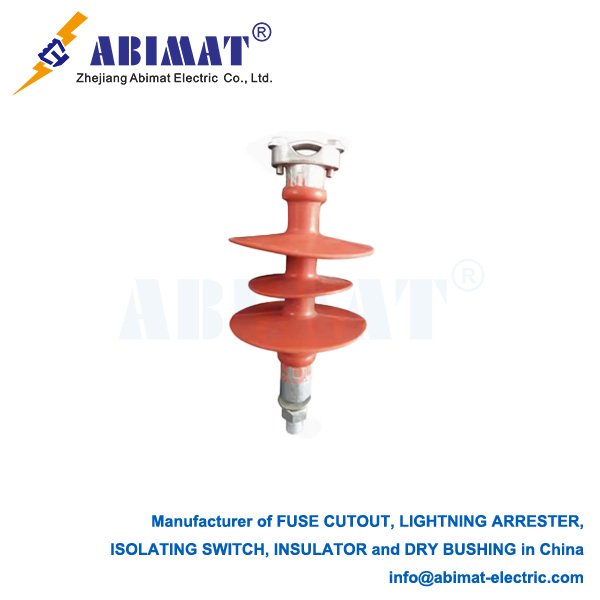
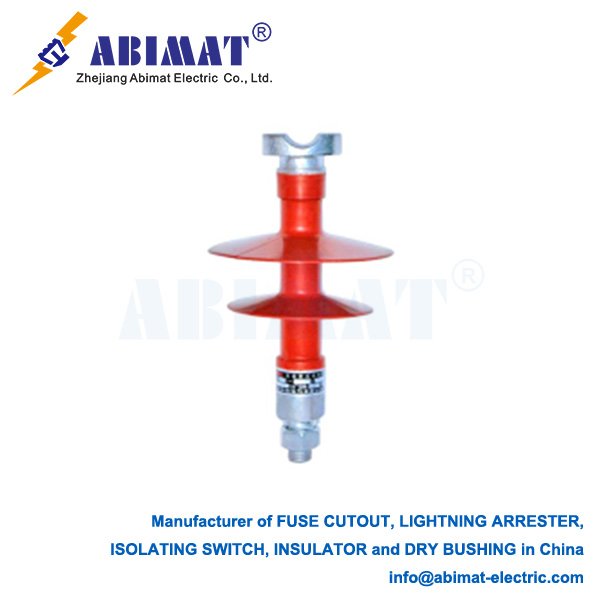
Polymer (composite) is a modern option. It uses a fiberglass rod for strength and silicone rubber “sheds” for insulation. These insulators are lighter. They also repel water well and stand up to vandalism better. But they need different care over their lifetime.
Choosing the right suspension insulator depends on several things. You have to think about the voltage rating and the mechanical load—how much tension the insulator can take. Environmental conditions matter too, like how polluted the area is. Lifecycle costs also play a part.
For ultra-high voltage (UHV) lines or very polluted places, workers might use long-rod porcelain insulators. They could also use special composite insulator strings. Even then, the basic idea of suspension stays the same.
In short, abimat suspension insulator strings are critical. They adapt well and work reliably. They have helped build safe, efficient high-voltage power networks all over the world.