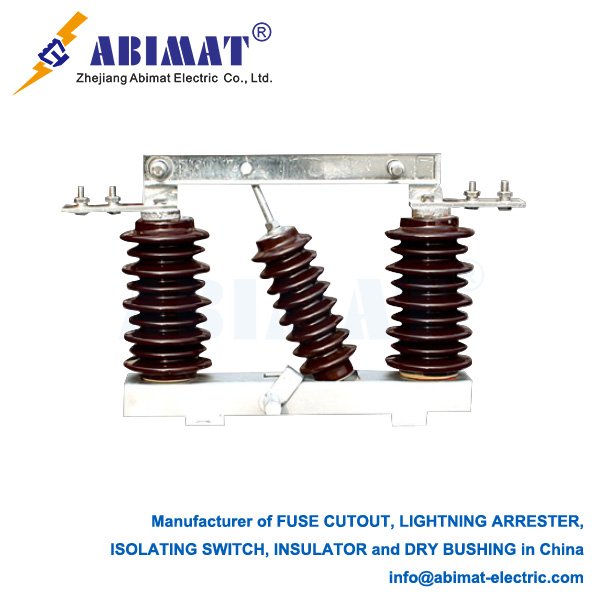
The 33kV Disconnector Switch: Key to Electrical Safety and Isolation
A 33kV disconnector switch, often called an isolator, is a basic mechanical switch. It works in medium-voltage power systems. Its main job—one that matters a lot—is to isolate part of a circuit safely and clearly. This lets workers do maintenance, make repairs, or redirect power. These switches run at 33,000 volts. They keep workers safe and make sure the power network stays in good shape.
Circuit breakers handle load or fault currents—disconnector switches don’t. They follow a strict safety rule. You can only open or close them when the circuit has no power, or when the current is almost zero. They link up with the related circuit breaker. This stops anyone from opening a live circuit with load—a move that would spark a dangerous, damaging arc.
The switch’s main design has a clear air gap between its contacts when open. This physical break in the circuit is the best proof. It tells workers the isolated part has no electricity, so they can work safely. That clear gap is a critical safety feature. Even extra indicators on a control panel can’t replace it.
You can spot key technical traits in these switches.
First is voltage. They are made for 33kV systems. Their insulation is strong enough to handle power frequency and sudden voltage surges.
Then comes build. Most have tough outer cases made for outdoor use. They stand up to rain, wind, and dirt. Common styles include center-break, double-break, and pantograph (vertical break) types. People pick them based on how much space they have and what they need the switch for.

Operation is flexible too. You can work some by hand with an insulated handle. Others use motors, so you can control them from a control room far away. Their operating parts act fast to open or close. This cuts down the time any possible spark might last when switching with no load.
The contacts matter too. They are strong and resist rust. Both main and arcing contacts handle two things: the capacitor charging currents from busbars and connections, and the small magnetizing currents from transformers that aren’t in use.
33kV substations usually have these disconnectors. You’ll find them on both sides of big equipment—things like circuit breakers, power transformers, and feeder lines. This setup lets workers isolate just one part. They don’t have to shut down the whole busbar or substation. That makes the system more flexible and reliable.
To sum up, the abimat 33kV disconnector switch is simple-looking but extremely important. It just needs to create a clear, certain isolation point. This is the foundation of safe work. It also helps manage the medium-voltage power system efficiently.