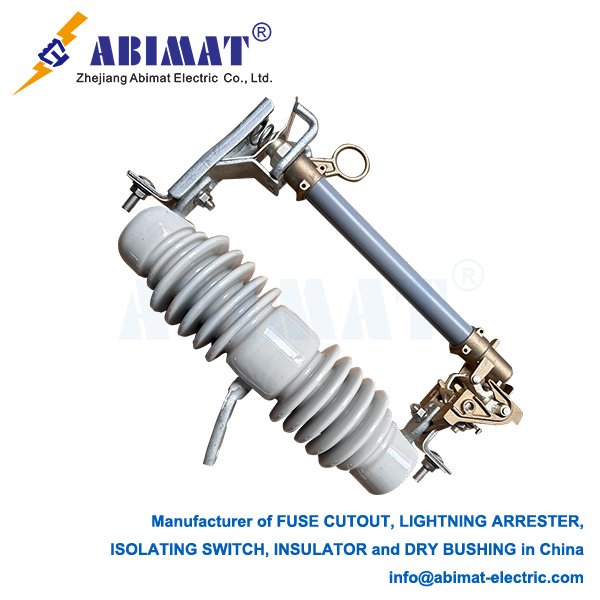
The Fuse Cutout: A Primary Protective Device in Distribution Systems
Fuse cutouts are common, important parts in electrical power distribution networks. They usually work on poles at the 15 kV level. They have two main, linked jobs: they protect against too much current, and they let you see that a circuit is isolated. Their design is simple, doesn’t cost much, and works on its own—great for protecting distribution feeders and transformers.
Core Function and Operation
The main job of a fuse cutout is to protect a part of the distribution circuit. Think of things like a lateral feeder or a distribution transformer—this device keeps them from getting damaged by too much current. That extra current usually comes from problems, like short-circuits or overloads that last a long time.
The device has a strong, open-style fuse holder. Inside it is a replaceable fuse link, and the whole thing is mounted on an insulating frame. When the circuit runs normally, the fuse link stays intact. So current flows through the cutout without issues. If too much current stays in the circuit—more than the fuse link can handle—the fusible part melts. This stops the current right away. The electric arc that forms then gets put out inside the fuse tube. Sometimes a de-ionizing filler material helps with this. After that, a release wire melts too. This lets the fuse holder pivot down and swing open, pulled by gravity.
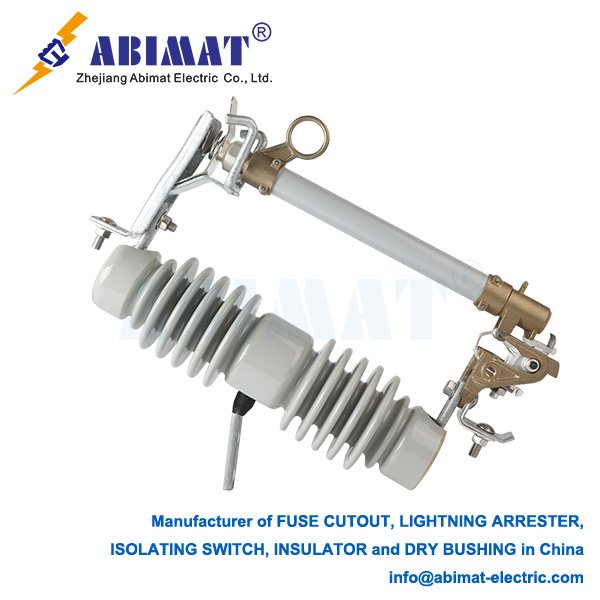
The Importance of the "Drop-Out" Feature
This “drop-out” or “trip-out” movement is a key safety feature. It gives a clear, easy-to-see sign—even from far away—that the fuse has worked. It also shows which part of the circuit has the fault. This helps utility crews find the fault fast and isolate it. So they can get the rest of the circuit working again quicker. What’s more, the open, dropped fuse holder makes a clear, visible air gap. This keeps lineworkers safer because it makes sure the isolated circuit can’t accidentally get power again.
Dual Role: Fuse and Switch
Besides protecting the circuit, a fuse cutout also works as a handy switch. It can stop load current and isolate parts of the circuit. Linemen use a hot-stick to open the fuse holder by hand. They do this to cut power to a circuit for maintenance—even when there’s no fault at all. The fuse cutout is mainly made to stop faults, but it’s also rated to safely stop normal load current when workers switch it manually.
Applications and Benefits
Abimat fuse cutouts are mostly used for two main tasks. One is protecting overhead lateral feeders: they isolate the parts with faults, so fewer customers lose power. The other is protecting transformers: they keep single distribution transformers or small groups of them safe from internal faults.
The key benefits of fuse cutouts are simple. They’re easy to use, they work reliably, and they show clearly when there’s a fault. By stopping the faulty parts fast, they keep the system safe. They also protect expensive equipment like transformers, and make the whole distribution network more reliable.