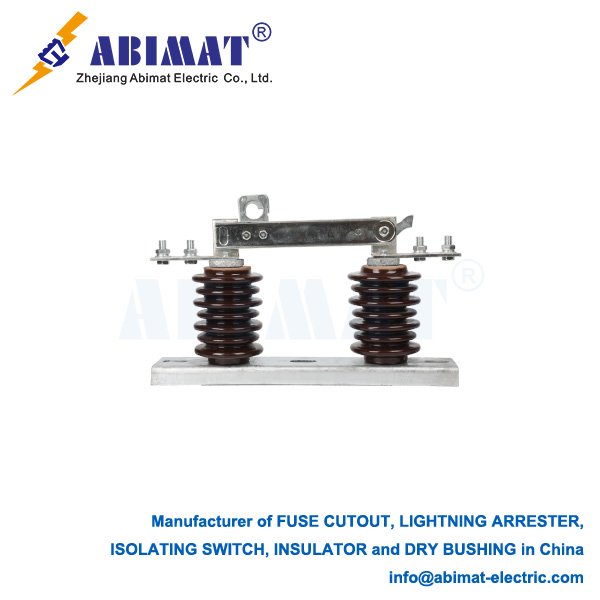
Vertical Break Disconnector: A Robust Switching Solution
A vertical break disconnector, or disconnect switch, is a basic mechanical switching device. It is used mostly in high-voltage electrical substations and power lines. Its main job is to make a safe, easy-to-see air gap. This gap cuts off a section of the circuit from the rest, so that section has no electricity when people need to fix or maintain it. The device isn’t built to stop load current or fault current. That’s what circuit breakers do. It only works after an upstream breaker has already turned off the electricity in the circuit.
You can tell how it works just from its name. The main moving contact arm turns up and down—along a vertical plane—to open or close the circuit. When it’s open, the arm swings down. This makes two separate, easy-to-see gaps one after the other. One gap is between the moving arm and the upper fixed contact. The other sits between the arm and the lower hinge contact. This double-gap design gives a longer total insulating air gap. It also makes the device more reliable.
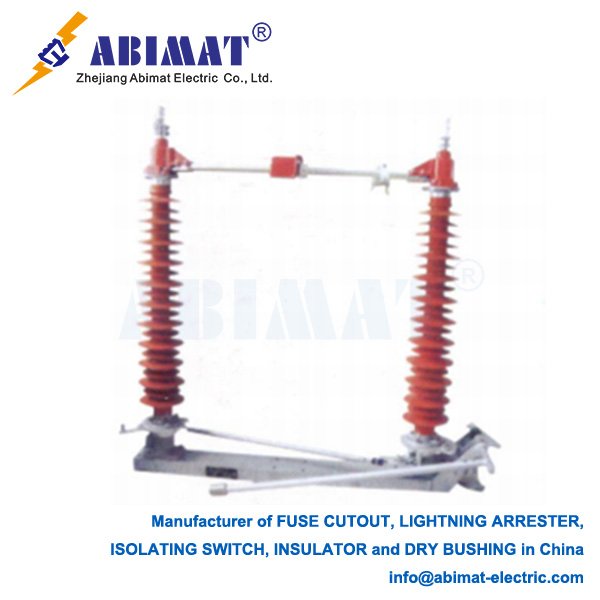
A typical vertical break disconnector has three main parts. There’s a base insulator column, a rotating insulator column that holds the moving blade, and two fixed contact sets—one upper and one hinge. You usually work it with a manual or motorized mechanism. This mechanism links to the rotating column through a crank arm. Its mechanical design is strong. Most moving parts are kept away from twisting stress. This gives it high mechanical strength, and it stays stable even when winds blow hard or ice forms on it.
The vertical break design has some key advantages. It has a long history of working reliably mechanically. It also does well in dirty, polluted places—all because the rotating contacts clean themselves as they move. The clear, visible gap is another good thing; it keeps the people working nearby safer. It’s especially good for uses where the device needs to handle high short-circuit currents. It also fits well when space is limited, since its compact vertical shape is better than a design that swings horizontally.
All in all, the vertical abimat break disconnector is a key, reliable part for keeping electrical isolation safe in power systems. Its action is simple but strong—opening and closing vertically to make a secure, easy-to-see gap. That’s why it’s such an important part of substation switchgear. It keeps circuits cut off properly and makes maintenance work safe.